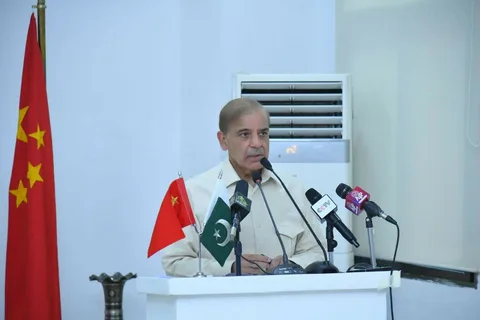
Prime Minister Shehbaz Sharif on Tuesday renewed the government’s offer of talks with the Pakistan Tehreek-e-Insaf (PTI), on one condition: the party must first end its long march and sit-ins. Speaking at an event in Islamabad, he warned that the protests could hurt exports, imports and manufacturing. He said the government remains ready to talk, but that the earlier negotiations had not produced results. The PTI has not called off its march.
Background: How the Talks Collapsed
The PTI began its long march on October 4 from Lakki Marwat in Khyber Pakhtunkhwa, led by Chief Minister Sohail Afridi. The party had earlier moved the date from September 27. Reports say the march started after talks between the government and the opposition, which also involved the Pakistan Peoples Party, failed to prevent it.
According to Shehbaz Sharif, a joint committee of the PML-N and the PPP held two days of talks with the PTI in the Speaker’s Chamber. He said the process stalled when the PTI’s delegation asked for changes to a draft that had already been agreed. The PTI has its own account of the talks, and it has not accepted the government’s version in the reports reviewed.
The government has also said the march will not be allowed to enter Islamabad. Officials point to the economy and public safety as their main concerns. The PTI says its protest is peaceful and aimed at securing relief for Imran Khan.
Details: What the Prime Minister Said
Shehbaz Sharif spoke at the groundbreaking ceremony of the Kashmir Chowk Underpass in Islamabad. He said the “shadows of dharnas and long marches” had returned once again. He added that the ruling coalition had collectively decided to hold talks with the PTI to persuade it to give up this style of politics.
His message to the PTI leadership was direct. He urged them to end the long march and sit-in, and said the government would then sit down with them. He also said efforts to make the earlier negotiations succeed had not borne fruit.
The prime minister linked the issue to the economy. He said the government had worked for two and a half years to stabilise the economy, and that renewed sit-ins would damage factories, offices, imports and exports. He said protecting lives and property was the government’s responsibility and that it would ensure this by all means.
Where the PTI March Stands
The remarks came as the PTI caravan, led by Afridi, reached Kohat on its way toward the capital. The march began with stops in Karak and Kohat, and its next stage was expected to be Peshawar. Reports describe it as moving towards Islamabad, though the party has not confirmed a final destination in the sources reviewed.
The party has not stepped back from its plan. That means the standoff between the government and the PTI remains unresolved, with both sides repeating their conditions.
Quotes: What Each Side Is Saying
Shehbaz Sharif said that “the politics of sit-ins and protests will directly target the national economy.” He also told the PTI to “come to your senses,” according to APP and others, and said the government would not allow disruption. The statements show how strongly he links the protest to economic risk.
The PTI says its demands relate to the legal cases and conditions of detention of its founder, Imran Khan. It describes its march as a democratic right. No new PTI statement responding to the prime minister’s latest offer was available in the reports reviewed.
Impact: Why This Matters
For the economy, the main concern is uncertainty. Marches, road closures and security restrictions can disrupt trade, transport and daily business, especially around the capital. Investors and exporters usually watch such events closely.
For politics, the offer shows that the government wants to appear open to dialogue while holding firm on its condition. The PTI, for its part, is under pressure to decide whether to continue the march or return to talks. Either choice could shape how the next weeks unfold.
For ordinary people, the biggest effects are likely to be traffic, security checkpoints and possible closures of roads and services. Past protests have caused delays and inconvenience in the twin cities. Officials have promised to protect lives and property.
Shehbaz Sharif Profile: Spouse, Nawaz Sharif, Net Worth and Height
Shehbaz Sharif is the younger brother of Nawaz Sharif, who is a three-time prime minister and the leader of the PML-N. Shehbaz served as Punjab’s chief minister three times before becoming prime minister in 2022, and he returned to the post after the 2024 election.
His spouse details are often searched. Public reports say he was married to Begum Nusrat Shehbaz, and later to author Tehmina Durrani, whom he married in 2003. Some accounts also mention an earlier marriage, but the details vary between sources, so readers should treat them with care.
His net worth is not given as a single official figure. Pakistan’s Election Commission publishes annual asset declarations for lawmakers, which are the best source for verified numbers. His height is not officially published, so I have not stated one.
Conclusion: What Comes Next
The next steps depend on the PTI’s decision. If the party ends the march, the government says talks can begin. If it continues, authorities have said they will not let it into Islamabad, which raises the risk of confrontation.
Observers will watch the next stops on the route, any change in the government’s stance, and the role of political groups that could mediate. A negotiated solution is still possible, but both sides will have to move from their stated positions. For now, the offer stands, and so does the march.
Frequently Asked Questions (FAQs)
How many wifes did Shahbaz Sharif have?
Public reports say Shehbaz Sharif has been married more than once. His first wife is Begum Nusrat Shehbaz, and he later married author Tehmina Durrani in 2003. Some accounts also mention a marriage to Aliya Hani, but the details, including dates and whether the marriage ended, differ across sources. Because this is a personal matter and no official record is widely published, it is best to rely on well-established biographies and avoid unverified claims. Tehmina Durrani is often described as his current spouse in media profiles.
What is the PM’s salary in Pakistan?
The prime minister’s pay is set by law and rules approved by the government, and figures vary by source and by year. Earlier reports have cited a monthly salary of roughly Rs200,000, along with various allowances and facilities, but I could not confirm the current amount from the sources reviewed. Some prime ministers have also said they do not take a salary or have declined certain benefits. For an accurate figure, check the Cabinet Division’s notifications or the latest official budget documents. Pay and benefits can change after revisions to salary rules.
What is the latest news on Shehbaz Sharif?
On Tuesday, October 6, Shehbaz Sharif renewed his offer of talks with the PTI, saying they can start only after the party ends its long march and sit-ins. He also said the earlier joint committee talks had failed, and he warned that protests would harm the economy. His remarks came as the PTI’s march, led by Sohail Afridi, reached Kohat. The government has said the march will not be allowed to enter Islamabad. Further developments are expected as the march continues and both sides respond.
Is Shehbaz Sharif Kashmiri?
Yes, by ancestry. The Sharif family is of Kashmiri origin, and its ancestors are reported to have come from Anantnag in Kashmir before settling in Punjab. After Partition, the family moved to Lahore, where Shehbaz Sharif was born in 1951. He and Nawaz Sharif are often described as Kashmiri-origin Punjabis, and Kashmir has been a recurring theme in their political speeches. His nationality is Pakistani, and his political career has been based in Punjab.